Belief
Sales Performance Is No Longer Driven Solely by Skill
For decades, sales performance was understood primarily as a function of technique—objection handling, product knowledge, negotiation tactics, and disciplined pipeline management. These remain essential, but the modern selling environment has introduced a new set of pressures: compressed buying cycles, increased stakeholder complexity, economic uncertainty, and rapidly shifting digital expectations. As a result, an underappreciated variable has emerged as a decisive performance differentiator: confidence.
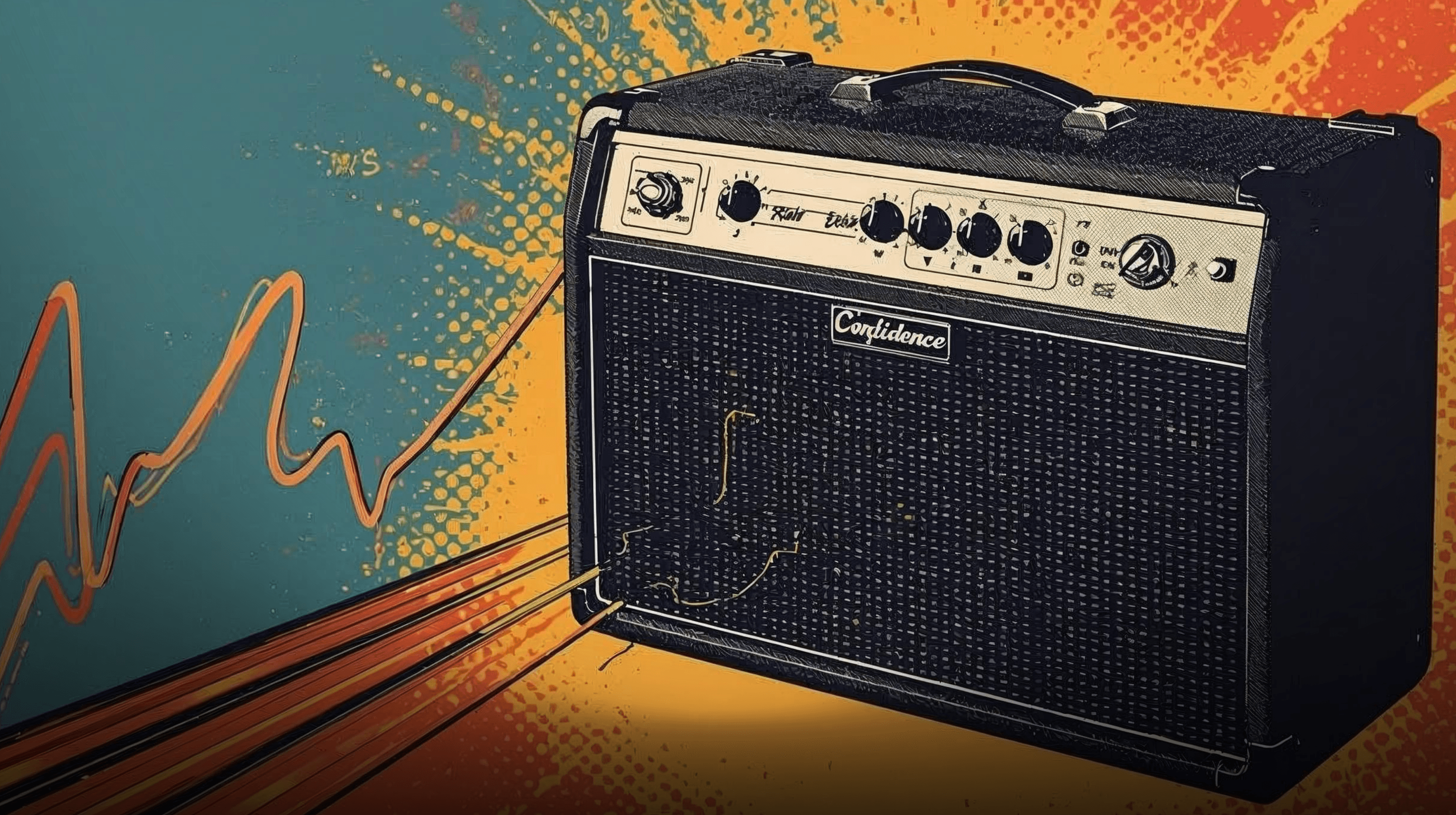
Confidence is often mischaracterized as a personality trait—something innate, sporadic, or emotional. But in high-stakes commercial environments, confidence is an operational asset. It influences decision quality, communication clarity, pipeline velocity, and a rep’s ability to navigate ambiguity. Measured across teams, confidence functions like a force multiplier: modest differences compound into outsized performance outcomes.
In other words, confidence is no longer a “soft skill.” It is infrastructure.
Low-Confidence Reps Are Now Structurally Disadvantaged
Modern selling punishes hesitation.
Buyers are more informed. Competition is broader. Internal consensus is harder to achieve. And digital interactions—video calls, Slack threads, short email exchanges—compress the signals reps used to rely on. When confidence weakens, performance decays in predictable patterns:
Outreach slows.
Risk-taking declines.
Opportunities age without momentum.
Reps default to transactional behaviors rather than consultative leadership.
Internal collaboration decreases because uncertainty feels exposing.
The problem is not simply that uncertain reps “feel less capable.” The deeper issue is that low confidence reduces the number of actions they take, and in sales, quantity and quality of actions define the upper bound of performance.
This creates organizational asymmetry: teams with confidence discipline widen the gap over those that treat confidence as circumstantial luck.
Confidence Reinforces Skill Through Three Mechanisms
While confidence is difficult to measure directly, its operational effects follow reliable patterns observed across performance psychology, behavioral economics, and decision science:
1. Confidence Expands Perceived Optionality
Reps with strong confidence see more pathways forward in moments of friction. They generate options instead of defaulting to avoidance. This increases creativity in deal management and improves the likelihood of momentum.
2. Confidence Accelerates Action Speed
High-confidence performers shorten the gap between intent and execution. They send the follow-up email faster, request the meeting earlier, and test alternative solutions without over-deliberation. Faster cycles increase the probability of catching buyers during critical inflection points.
3. Confidence Increases Persuasive Power
Confidence affects how reps frame insights, guide buyer decisions, and establish credibility. A rep's conviction becomes a proxy for trustworthiness in many early-stage interactions. Buyers may not have enough information to evaluate the product—but they can evaluate whether the rep seems like someone worth following.
Confidence, therefore, is not simply internal psychology. It is externally visible and economically consequential.
Elite Performers Build Confidence from Structure, Not Emotion
Across sales teams, top performers do not rely on spontaneous bursts of self-belief. Instead, they engineer confidence through predictable inputs:
Clear personal operating systems (weekly priorities, playbooks, templates)
Consistent skill rehearsal (roleplays, scenario training, objection libraries)
Data-driven review loops (weekly performance audits, opportunity dissection)
Tight narrative control (intentional self-talk, story framing, past-wins cataloging)
The common pattern: confidence grows from evidence, not ego.
Elite reps build systems that generate evidence continuously.
Why Confidence Multiplies Performance Instead of Merely Improving It
Confidence does not just add to performance—it compounds it. That compounding comes from three accelerating feedback loops:
1. The Action–Outcome Loop
More confident reps take more actions. More actions create more learning. More learning improves skill. Skill improves confidence. This loop accelerates nonlinearly.
2. The Buyer-Response Loop
Buyers respond better to confident reps—clearer communication, stronger recommendations, more decisive leadership. Positive buyer reactions then reinforce the rep’s confidence, which improves buyer experience in the next interaction.
3. The Organizational Loop
Confident reps require fewer interventions from leadership, collaborate more effectively across functions, and contribute to a performance-supportive culture. As pockets of confidence grow, team norms shift upward.
When these loops operate simultaneously, a team doesn’t just get better—it becomes more capable of becoming better.
The Hidden Cost of Under-Confidence on Sales Teams
Most organizations underestimate the systemic drag created by low confidence:
Activity-based KPIs look artificial because reps fear high-quality activity.
Deal slippage increases as reps hesitate to set deadlines or push decisions.
Forecasting accuracy suffers because insecure reps over-index on hope rather than inspection.
Coaching effectiveness declines because reps misinterpret feedback as threat rather than development.
Cross-functional alignment weakens, especially with product and marketing, because low-confidence reps avoid raising critical insights.
Under-confidence is not simply a mindset risk. It is an operational risk.
A Structured Model for Building Sales Confidence
Below is a model used by high-performing teams to convert confidence from a variable into a process:
1. Evidence Generation: Build a Library of Wins
Reps systematically capture:
Closed deals
Earned meetings
Reframed objections
Recovered opportunities
Internal praise or recognition
Quantifiable impact stories from customers
This becomes a personal body of evidence—a foundation that counters emotional volatility.


2. Clarity Engineering: Reduce Cognitive Load
Confidence erodes when ambiguity increases.
Reps need:
A clear weekly priority hierarchy
Defined opportunity stages and milestone checklists
Standardized messaging frameworks
Simple decision trees for stuck deals
Clarity reduces mental noise. Less noise means more conviction.
3. Skill Rehearsal: Reduce the Fear of the Unknown
Confidence rises when fewer situations feel novel.
Elite teams use:
Repetition-based objection reps
Recorded call breakdowns
High-pressure simulation scenarios
Roleplays where reps practice being out of their depth
Training removes ambiguity. Ambiguity is one of confidence’s primary threats.
4. Narrative Mastery: Control the Internal Dialogue
Top performers treat internal narrative as an asset to be managed strategically—not an accidental background process.
They ask:
What story am I telling myself about this deal?
Does this narrative help or hinder motion?
What evidence contradicts my negative assumptions?
Reframing narrative creates behavioral change before outcomes shift.
5. Micro-Taking of Risks: Build Tolerance for Discomfort
Confidence strengthens through controlled exposure to risk.
Reps take weekly micro-risks:
Asking a stronger question
Recommending a bold next step
Challenging misaligned reasoning
Accelerating a timeline
Raising a point others avoid
Micro-risks accumulate into macro-confidence.
How One Team Broke a Confidence Plateau
A mid-market SaaS sales team struggled with inconsistent performance despite strong product-market fit. Leadership introduced a confidence-building operating system:
Evidence-tracking across all reps
Weekly “Conviction Reviews” for top deals
Objection simulation drills
A shared “Confidence Library” documenting winning plays
Micro-risk challenges assigned each Friday
Within two quarters, win rates increased, sales cycle length shortened, and forecast accuracy improved. Notably, the team’s internal survey showed a measurable rise in perceived self-efficacy—a strong proxy for commercial confidence.
This validated the insight: confidence changes performance architecture, not just mood.
Actionable Takeaways for Sales Leaders and Reps
If you lead a team:
Establish a weekly Confidence Operating Rhythm.
Build collective evidence repositories.
Coach narrative reframing, not just tactic correction.
Normalize micro-risk-taking.
Celebrate clarity, not just results.
If you are an individual contributor:
Capture every win, no matter the size.
Identify the two areas where ambiguity reduces your confidence, and systematize them.
Review a past call each week to extract evidence of capability.
Practice one micro-risk on every live deal.
Build a personal weekly confidence ritual.
Confidence is not a feeling. It is an asset you manufacture.
Teams who operationalize confidence outperform those who merely hope for it.
And in a selling environment defined by complexity and speed, confidence becomes the invisible multiplier that transforms competent reps into elite performers—and transforms sales organizations into durable competitive engines.