Priorities
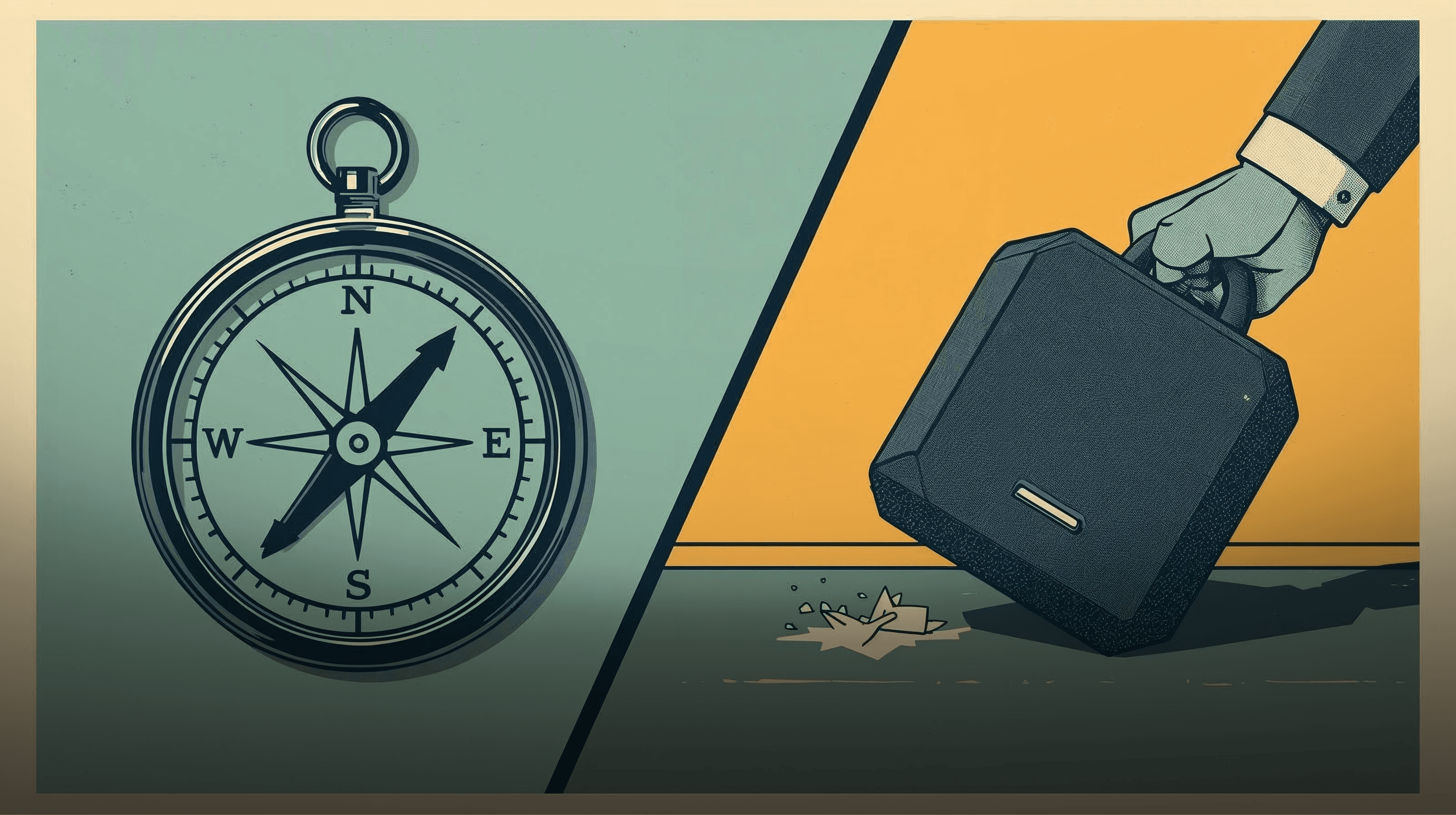
Why buyers act on what matters, not on what feels loud, and how confusion between the two stalls decisions
Noise has risen faster than clarity
Modern buying teams operate across about ten interaction channels and expect to move seamlessly among them. When the experience is clunky, more than half will switch suppliers. This multiplies messages, meetings, and “urgent” pings that compete for attention every day. McKinsey B2B Pulse 2024 [courses.wa...ington.edu]
Seller access is simultaneously shrinking: buyers spend only 17% of their total purchase time with all vendors combined, meaning the most important prioritization work happens internally, between supplier touchpoints. Gartner press release [advertisingweek.com]
Implication: urgency signals are plentiful; true priority signals are faint. If sellers mirror the noise, they amplify pressure. If they help buyers isolate priority, they accelerate commitment.
Pressure accelerates activity, not commitment
Pipeline often looks “busy” right up to the moment deals stall. The pattern is well‑documented: 86% of B2B purchases stall somewhere during the process, and 81% of buyers end up dissatisfied with the provider they choose—classic indicators of motion without durable agreement on what truly matters. Forrester newsroom [worldcc.com]
Indecision is the silent killer. In a study of 2.5 million sales conversations, 40–60% of qualified opportunities ended in no decision, primarily because stakeholders feared making the wrong choice. Pressure can mask that fear for a while by keeping everyone “busy,” but it rarely resolves it. Harvard Business Review [pwc.com]
Pressure is external; priority is internal
Pressure comes from deadlines, quarter‑ends, executive visibility, and competing initiatives. It demands reaction and is often loud.
Priority reflects what the organization cannot afford to get wrong—risk, compliance, stability, defensibility. It demands protection and is often quiet.
This distinction matters because buyers operate in an omnichannel, multi‑stakeholder arena where signals abound but accountability concentrates. When decisions go public, late reviewers (CFO, CISO, Legal) often assert the priorities that will govern the decision—regardless of earlier urgency. McKinsey B2B Pulse 2024; Forrester newsroom [courses.wa...ington.edu] [worldcc.com]
How pressure masquerades as priority in buying conversations
Pressure wears persuasive language: “EoQ deadline,” “use‑it‑or‑lose‑it budget,” “leadership wants this now.” Those cues sound decisive but are situational, not structural. By contrast, priority speaks through hesitation: asks for risk mitigation, role clarity, security/privacy evidence, and defensibility. These behaviors slow visible progress but strengthen the decision. Gartner B2B Buying Report [hbr.org]
When sellers optimize the plan for deadline pressure and skip governance clarity, they often trigger rework under late scrutiny, which is one pathway to the ~8.6% average value erosion many organizations experience in contracting. Deloitte–WorldCC [financedigest.com]


Why buyers default to pressure‑driven behavior
Under stress, people gravitate to urgent tasks that create visible progress and social approval—responding quickly, holding more meetings—while deferring consequential tasks that force trade‑offs and accountability. The omnichannel environment amplifies this effect by creating more urgent touchpoints and more “micro‑deadlines.” McKinsey B2B Pulse 2024; Forrester newsroom [courses.wa...ington.edu] [worldcc.com]
The result is motion without risk resolution—a setup for no‑decision or for post‑signature dissatisfaction when the unaddressed priorities bite back. Harvard Business Review [pwc.com]
The cost of acting on pressure instead of priority
Shallow plans that miss owner, risk, and rollback details are fragile in internal reviews; they often balloon late‑stage process as risk owners add their own checks. Forrester newsroom [worldcc.com]
Inconsistent proof across ten channels creates confusion and switching behavior; more than half of buyers are willing to change suppliers if the cross‑channel experience is poor. McKinsey B2B Pulse 2024 [courses.wa...ington.edu]
Value leakage climbs when contracting tries to fix what planning ignored, contributing to the ~8.6% erosion benchmark. Deloitte–WorldCC [financedigest.com]
How elite sellers tell priority from pressure
Look for what is protected, not what is proclaimed.
Stops vs. debates. Which concerns stop scheduling rather than trigger healthy discussion? That’s a priority boundary. In data, rep‑assisted steps at those moments correlate with 1.8× higher likelihood of a high‑quality purchase, because the rep helps translate priority into an executable path. Gartner B2B Buying Report [hbr.org]
Late gates. Who must bless the decision last (CFO, CISO, Legal), and what will they require? If privacy certifications, data‑flows, or TCO sensitivity are non‑negotiable, those are priority proofs—especially since 98% of organizations weigh external privacy certifications in purchasing. Cisco 2024 Data Privacy Benchmark [worldcc.com]
Deadline removal test. If you hypothetically slide the deadline, which concerns remain? Whatever persists is priority.
Redirecting conversations from pressure to priority
Do not dismiss urgency; contextualize it.
Acknowledge deadlines, then pivot: “What would still matter if the date moved two weeks?” This reveals non‑negotiables. Forrester newsroom [worldcc.com]
Shift from timing to consequence: “If something goes wrong, who absorbs it, and what would make this decision defensible at the CFO/CISO review?” These questions attack no‑decision drivers directly by taking risk off the table. Harvard Business Review [pwc.com]
Use planning as the priority filter
Pressure resists planning; priority demands it.
A buyer‑facing plan that includes owners, gates, rollback, and governance separates structural needs from situational urgency and travels well across the ten‑channel journey where sellers lack control. McKinsey B2B Pulse 2024 [courses.wa...ington.edu]
Build three lightweight components:
Feasibility one‑pager (Day‑30/60/90): scope, metrics, escalation path, rollback criteria. This reduces fear‑driven no‑decision by making the first mile survivable. Harvard Business Review [pwc.com]
Governance pack: privacy/security posture with recognized certifications; a finance‑ready TCO sensitivity. These satisfy late gates and cut the rework behind the ~8.6% erosion benchmark. Cisco 2024 Data Privacy Benchmark; Deloitte–WorldCC [worldcc.com] [financedigest.com]
Rep‑assisted checkpoints at internal decision gates. Buyers are 1.8× more likely to report a high‑quality deal when supplier tools are paired with human guidance at the hard parts. Gartner B2B Buying Report [hbr.org]
Brief case
One team chased an executive deadline, trimmed planning, and pushed for same‑quarter signature. Late security and finance reviews forced a reset; the deal slipped and re‑entered the cycle.
A second team acknowledged the same deadline and insisted on a feasibility gate plus a governance pack. The date moved slightly, but the CFO/CISO approvals held and contracting mirrored the phases, avoiding downstream erosion. The difference was not urgency; it was anchoring to priority over pressure. Cisco 2024 Data Privacy Benchmark; Deloitte–WorldCC [worldcc.com] [financedigest.com]
Implications for sales leadership
Forecasting: Treat pressure‑driven deals as fragile. Confidence should rise only when priority artifacts exist (feasibility gate, governance pack, executive memo), not when a date is on a slide. This approach aligns with observed stall and dissatisfaction rates. Forrester newsroom [worldcc.com]
Coaching: Arm reps with the deadline‑removal test and the consequence‑first question set to counter no‑decision dynamics. Harvard Business Review [pwc.com]
Enablement: Standardize a lightweight plan template that can travel across the ten‑channel journey when your team has just 17% of buyers’ time. McKinsey B2B Pulse 2024; Gartner press release [courses.wa...ington.edu] [advertisingweek.com]
Actionable takeaways
For sellers
Do not equate urgency with importance; test what remains if the deadline shifts. [worldcc.com]
Listen for what stakeholders are protecting (risk, compliance, reversibility), not what they are promoting (speed, optics). [hbr.org]
Treat resistance to planning as a pressure signal; insist on feasibility and governance gates. [financedigest.com]
Use rep‑assisted checkpoints where internal gates exist; capture the 1.8× quality lift. [hbr.org]
For sales leaders
Review deals for resilience beyond deadlines: do feasibility, governance, and executive memo exist. [worldcc.com]
Discourage speed that bypasses risk resolution; it fuels no‑decision or post‑signature erosion. [pwc.com], [financedigest.com]
Reward teams that anchor progress to priority proofs that survive the ten‑channel journey with only 17% seller access. [courses.wa...ington.edu], [advertisingweek.com]
Final insight
Pressure creates noise. Priority creates commitment.
In complex B2B sales, the most reliable progress comes not from amplifying urgency, but from clarifying what must be right when the dust settles—and designing that decision to withstand time, scrutiny, and governance. Forrester newsroom; Gartner B2B Buying Report [worldcc.com] [hbr.org]