Momentum
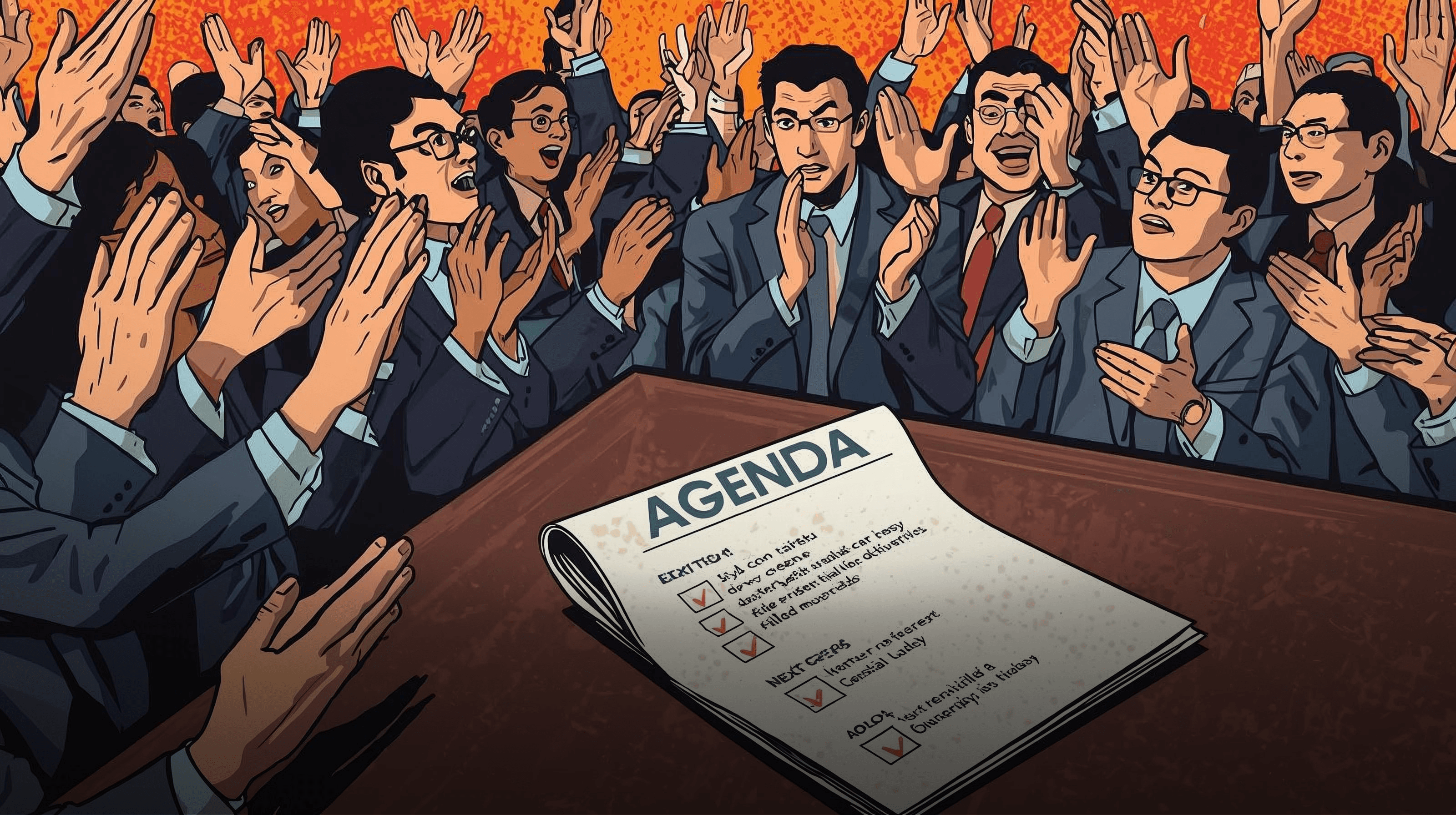
How expressed excitement masks unresolved risk, and why real progress is quieter than it sounds
Executive summary
In today’s enterprise buying, verbal enthusiasm is cheap and abundant. It is also a weak predictor of outcome. Modern buying groups span more people, more functions, and about ten interaction channels, which means decisions are exposed to more scrutiny and more veto points than ever before. In that environment, upbeat language (“we’re excited,” “this aligns,” “great fit”) travels fast, but commitment travels slowly and mostly without the seller in the room. Sellers get only 17% of buyers’ total purchase time; the rest is internal debate, risk management, and politics. If your forecast relies on tone rather than internal behavior, you are flying on hope. [mckinsey.com], [gartner.com]
This long‑form explainer shows why enthusiasm routinely misleads, what does predict momentum, and how to convert positive sentiment into owned action. Along the way, we ground every claim in current research: McKinsey’s 2024 B2B Pulse on omnichannel buying, Gartner’s findings on time allocation and non‑linear journeys, Forrester’s stall and dissatisfaction rates, HBR’s evidence on “no decision,” and WorldCC/Deloitte’s contract value erosion data. [mckinsey.com], [gartner.com], [forrester.com], [hbr.org], [deloitte.com]
Expression has outpaced commitment
Two structural shifts explain why upbeat words no longer track with real progress.
Omnichannel exposure. B2B customers now use an average of ten interaction channels (up from five in 2016). More channels mean more internal forwarding and more rooms where your idea will be paraphrased—without you there to defend nuance. If that experience isn’t seamless, buyers switch; omnichannel quality is now table stakes. [mckinsey.com]
Limited seller access. Gartner reports buyers spend only 17% of their purchase time with all potential suppliers combined. Translation: enthusiasm shown to you is a tiny slice of the process. The decision is shaped in internal sessions (consensus, validation, governance) that you do not attend. [gartner.com]
Implication: Verbal enthusiasm reflects how people talk to vendors. Commitment reflects what they do with each other.
Why enthusiasm creates false confidence
The most comprehensive 2024 data is blunt: 86% of B2B purchases stall somewhere, and 81% of buyers end dissatisfied even after selecting a provider. Those numbers are incompatible with the optimistic tone found in many pipelines. They reveal a process where positive language is cheap, but follow‑through is scarce. [forrester.com]
HBR’s analysis of 2.5 million sales conversations shows that 40–60% of qualified opportunities end in no decision—not because the solution lacks merit but because customers fear getting it wrong. When fear, not logic, governs the last mile, enthusiastic talk earlier is a poor predictor of action. [hbr.org]
Bottom line: Enthusiasm often signals social cooperation, not operational readiness.
Talk is cheap when risk is asymmetric
Early in the journey, saying “we’re excited” has near‑zero downside. It maintains vendor optionality, shows openness to colleagues, and buys time. As the decision approaches, downside grows: buyers must face governance gates (security, privacy, finance), document ownership, and survive peer review. In those rooms, risk—not rapport—decides.
Gartner’s non‑linear model explains the shift: teams loop through jobs like validation and consensus creation. Positive sentiment may lubricate the early loop, but late loops test defensibility. If sellers mistake smiles for consensus, the next loop feels like a “surprise” stall. [gartner.com]
Why buyers use enthusiasm strategically
Enthusiasm solves social problems:
Keeps options open across ~10 channels while peers and leaders observe the process. [mckinsey.com]
Maintains goodwill with multiple vendors while the internal team hashes out risk.
Signals alignment upward without triggering early dissent.
Forrester’s 2024 study quantified the internal noise: buying groups average 13 participants, and 89% of purchases span two or more departments. When that many people must converge, positive language helps socially—even if nothing material has been decided. [forrester.com]
How enthusiasm masks unresolved internal work
Enthusiasm can coexist with four unresolved blockers:
Ownership is unassigned.
Risk has not met its gatekeepers (security, legal, finance).
Success criteria aren’t defined or sequenced.
Trade‑offs haven’t been accepted.
None of these deficits stop someone from saying “we’re excited.” All of them stop a deal. The result is late friction: legal re‑drafts scope, finance re‑prices, security adds controls. On average, organizations lose ~8.6% of contract value to this misalignment, a number repeatedly found in WorldCC/Deloitte research. [deloitte.com]
Enthusiasm vs. conviction: the behaviors that actually matter
Enthusiasm is language. Conviction is behavior that carries cost. Look for:
A named owner whose KPIs will move (conviction).
Calendared internal reviews (conviction).
Governance artifacts prepared early (privacy certifications, data flows, TCO) (conviction).
Sequenced steps with Day‑30/60/90 metrics and rollback (conviction).
Gartner shows that deal quality improves when supplier digital tools are used with a sales rep at critical checkpoints—evidence that conviction shows up in structured, rep‑assisted gates, not in adjectives. [emt.gartnerweb.com]
Why sellers are vulnerable to enthusiasm bias
Pipelines reward optimism. Managers ask for dates, not doubts. Under pressure, teams equate positive tone with progress. But the research warns otherwise:
Stalls: 86% stall rate despite optimistic pipelines. [forrester.com]
No decision: 40–60% end without purchase because of fear. [hbr.org]
Regret and quality: Buyers are 1.65× more likely to feel regret after self‑service purchases; rep‑assisted digital paths cut regret by half and are 1.8× more likely to produce a “high‑quality deal.” (So a seller who substitutes positive talk for structured guidance makes regret more likely.) [emt.gartnerweb.com]
Optimism isn’t just a mood—it's a forecasting bias.
The behavioral signals that outperform verbal indicators
Here are momentum signals that beat “we’re excited”:
New stakeholders appear with context (they were briefed internally before your call). [gartner.com]
Objections turn specific (e.g., “Map vendor data to our ISO 27701 controls”), which implies risk‑owner engagement. (Cisco’s 2024 benchmark: 98% say external privacy certifications influence buying—if privacy is asking for certs, you’re in the real work.) [cisco.com]
Planning documents circulate (internal memos, scoping drafts). [gartner.com]
Internal deadlines supersede vendor‑proposed timelines (the work is now theirs). [gartner.com]
These traces indicate alignment forming where it counts—inside.
Why enthusiasm often peaks before resistance
This is not backtracking; it’s progression. People are liveliest when possibilities are abstract and personal exposure is low. As soon as the conversation turns to implication—ownership, metrics, auditability—tone cools and tension rises. Gartner’s research on buying group conflict (74% show “unhealthy conflict”) underscores how normal this is; the groups that reach consensus are 2.5× more likely to report high‑quality deals. Don’t fear the friction—enable the consensus. [gartner.com]


How to respond to enthusiasm the right way
Treat positive sentiment as permission, not proof. Use it to lean into consequence, not to skip it.
Translate tone into tests. “Great—who will own Day‑30 results?” This reframes enthusiasm as an internal assignment. [gartner.com]
Design the first mile. Propose a reversible step with Day‑30/60/90 metrics and rollback. HBR’s “no decision” work shows fear drops when the first step is survivable. [hbr.org]
Pre‑wire gatekeepers. Include a mini governance pack (recognized privacy certifications + finance‑ready TCO) so security and finance can say “yes” early. The 98% certification signal tells you this matters across industries. [cisco.com]
Orchestrate rep‑assisted checkpoints. Put your presence where decisions happen; research shows the 1.8× quality lift. [emt.gartnerweb.com]
This approach converts excitement into structure.
Using enthusiasm as a diagnostic tool
Enthusiasm becomes valuable if you read it for absence:
Persistent enthusiasm + no owners = avoidance.
Lower enthusiasm + more planning = seriousness.
Happy talk + missing governance = late stall risk (and potential 8.6% value erosion at contract). [deloitte.com]
When tone stays high while commitments remain vague, escalate structure, not pressure.
Case study: same excitement, different outcomes
Deal A: “They love us.”
A buying group was uniformly positive across several calls. The seller pressed for close. No owners were named. Procurement asked for final pricing. Security and finance arrived after selection with new requirements. The deal cycled for months, illustrating Forrester’s stall pattern and the late friction Gartner’s model predicts. [forrester.com], [gartner.com]
Deal B: “The tone cooled—then we closed.”
Another seller took similar early enthusiasm as a green light to introduce ownership and governance immediately. They proposed a reversible Phase‑1 with Day‑60 metrics and prepared a privacy/TCO pack for risk owners. Enthusiasm dipped as hard work began; momentum rose as internal behaviors aligned. The deal closed with fewer surprises, and post‑signature erosion stayed low because scope matched governance from the start. [hbr.org], [cisco.com], [deloitte.com]
Lesson: Treat cooling tone as the start of real work, not the end of your chance.
Leadership lens: rewire your forecasting for behavior, not tone
If your QBRs reward “they said they’re excited,” you will over‑forecast. Replace sentiment with a behavioral checklist:
Owner named with KPI impact? (Y/N) [gartner.com]
Internal memo circulated between meetings? (Y/N) [gartner.com]
Governance pack reviewed by security/finance? (Y/N) (Remember 98% privacy‑cert importance.) [cisco.com]
First‑mile plan with Day‑30/60/90 and rollback? (Y/N) (Counter no decision risk.) [hbr.org]
Rep‑assisted gate scheduled (CFO signoff, security review)? (Y/N) (1.8× quality lift.) [emt.gartnerweb.com]
Also normalize friction: Gartner finds 74% of buyer teams display “unhealthy conflict.” Your sellers’ job is to surface and sequence it, not to celebrate cheerleading. [gartner.com]
Practical playbook: convert excitement into owned action
1) Reframe the next call
Open with: “Since people are excited, let’s make that excitement defensible.” Then propose this three‑item agenda:
Owner & KPI: Who signs the Day‑30 metric?
Risk checkpoint: Security + finance review in‑line with a micro governance pack (privacy certs + TCO). (Cisco: 98% say certifications influence purchase.) [cisco.com]
First‑mile scope: One contained workflow, reversible, with calendarized checkpoints (HBR fear reducer). [hbr.org]
2) Leave behind artifacts that travel across ~10 channels
A two‑minute executive memo (why now, what first, how risk is boxed) and a one‑page plan with Day‑30/60/90 checkpoints. With your 17% access, written brevity makes your case when you’re absent. [gartner.com], [mckinsey.com]
3) Instrument rep‑assisted gates
Book your presence where stakes are real: security sign‑off (certs, data flows), CFO review (TCO scenarios), phase exit (metric hit/miss and rollback decision). Expect a 1.8× higher probability of a high‑quality deal. [emt.gartnerweb.com]
4) Protect value at contract
Match scope and risk artifacts before signature to avoid the ~8.6% erosion common in misaligned deals. [deloitte.com]
Frequently asked questions
Q: Isn’t enthusiasm necessary for change?
Yes—but it is insufficient. Treat enthusiasm as social lubricant; then demand behaviors that carry cost (owners, governance, sequenced steps). Gartner’s data shows quality emerges from consensus‑building and rep‑assisted checkpoints, not from tone. [emt.gartnerweb.com], [gartner.com]
Q: Won’t introducing governance kill the vibe?
If “vibe” is your goal, maybe. If closing is your goal, early governance raises deal quality and cuts regret (and keeps you out of the no‑decision ditch). Cisco’s benchmark and Gartner’s regret/quality findings are unequivocal. [cisco.com], [emt.gartnerweb.com]
Q: What if positivity is the only thing keeping access open?
Then use positivity to win access to the right rooms: suggest a short, structured next step that invites risk owners. If you cannot secure those rooms, you don’t have a deal—you have applause.
Putting it all together: a diagnostic matrix you can use tomorrow
Signal in the room | What it likely means internally | Seller move |
|---|---|---|
“We’re excited.” No owner. | Social cooperation; no consequence accepted. | Ask for the Day‑30 owner and metric before proceeding. [gartner.com] |
“This aligns.” Requests for pricing before planning. | Buying group is in comparison mode; high stall/regret risk. | Propose first‑mile scope + governance pack; delay final pricing until criteria are set. [forrester.com], [emt.gartnerweb.com] |
“Let’s keep it light; we’ll loop in security later.” | Non‑linear loop will re‑open; late veto likely. | Bring certs/TCO now; schedule a rep‑assisted gate. [cisco.com], [emt.gartnerweb.com] |
Enthusiasm cools as planning begins. | Risk is being processed; consensus work has started. | Support with artifacts; avoid pressure. [gartner.com] |
Implications for go‑to‑market leaders
Redefine momentum. Make internal behaviors your gate criteria. If nothing changed between meetings, enthusiasm is noise. [gartner.com]
De‑bias forecasts. Insist on the behavioral checklist (owner, memo, governance, first‑mile, gate). Replace “they’re excited” with “they scheduled the CFO checkpoint.” [emt.gartnerweb.com]
Fix enablement. Train reps to convert tone into structure and to welcome friction as a sign of real work. Gartner’s finding that 74% of buying teams show “unhealthy conflict” should be a coaching North Star—not a reason to chase more smiles. [gartner.com]
Conclusion: real momentum is quieter than it sounds
Enthusiasm is easy. Commitment is hard. The contemporary buying reality—more channels, less seller time, more stakeholders, higher scrutiny—means you cannot afford to confuse tone with traction. The data says most deals stall; many die of no decision; and value erodes when scope outruns governance. The antidote isn’t more charisma. It’s design: owners, governance, sequenced first miles, and rep‑assisted gates that turn positive sentiment into owned, defensible action. [forrester.com], [hbr.org], [deloitte.com]
If you start treating verbal enthusiasm as baseline politeness and begin rewarding the quiet, costly behaviors that constitute conviction, your forecasts will tighten, your deals will stabilize, and your customers will experience fewer regrets—and more high‑quality outcomes. [emt.gartnerweb.com]
References
McKinsey B2B Pulse 2024: Five fundamental truths—ten channels, omnichannel expectations [mckinsey.com]
Gartner press release: 80% digital by 2025; buyers spend 17% of time with suppliers [gartner.com]
Forrester 2024: 86% stall, 81% dissatisfaction; 13 participants avg; 89% multi‑dept [forrester.com]
HBR: Stop Losing Sales to Customer Indecision—40–60% no‑decision, 2.5M calls [hbr.org]
Gartner: Non‑linear B2B buying journey; rep‑assisted digital = 1.8× quality lift; regret data [emt.gartnerweb.com]
WorldCC/Deloitte: Average contract value erosion ~8.6% [deloitte.com]
Cisco 2024 Data Privacy Benchmark: 98% say external privacy certifications influence purchasing [cisco.com]