Goal-Orientation
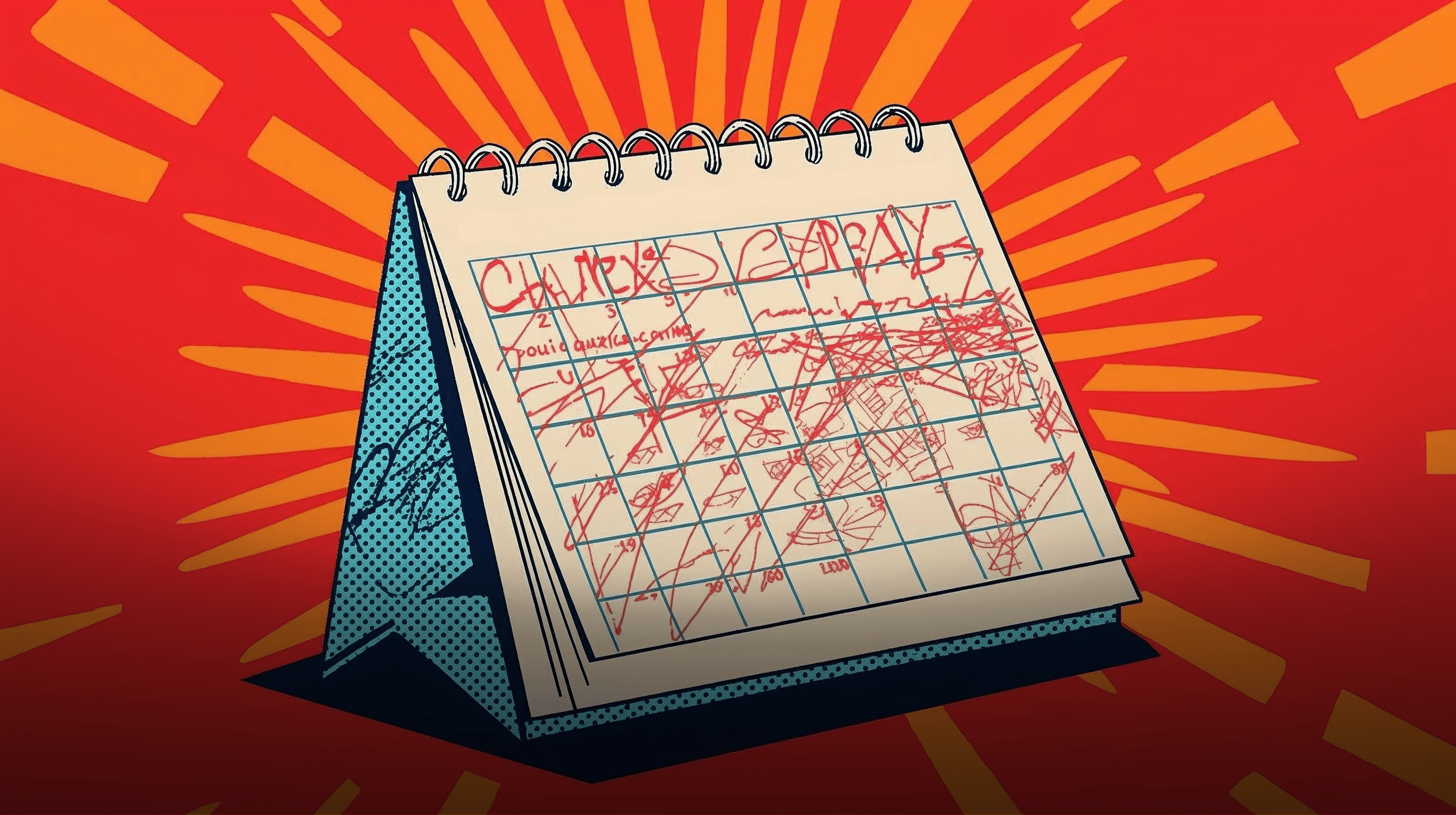
Why external urgency erodes strategic focus, how priority drift degrades performance, and what disciplined professionals do to protect direction under pressure
Priority intrusion has become a constant condition
Modern commercial environments are built on nonstop interruption. Slack, email, and internal asks now create near‑continuous noise. Sellers feel this acutely: recent data shows that complex B2B deals now involve 8.2 stakeholders, up from 6.8, amplifying inbound demands and time‑sensitive requests from multiple angles.
Source [marketingscoop.com]
Simultaneously, internal operational load has exploded. Salesforce’s State of Sales research shows reps spend only 28–30% of their time selling, while 70% is consumed by non‑selling tasks, much of it driven by others’ priorities rather than their own.
Source
Source [salesforce.com] [zdnet.com]
External priority pressure is no longer a periodic spike. It is the operating climate.
Priority hijacking degrades outcomes before it degrades effort
When priorities are hijacked, people don’t slow down. They speed up. They answer faster, attend more meetings, and respond to more inputs. But coherence disappears first.
Neuroscience explains why. Even mild uncontrollable stress impairs the prefrontal cortex, the part of the brain responsible for planning, working memory, and selective attention.
Source [europepmc.org]
Decision fatigue follows. A well‑known field study of Israeli parole boards found that decision quality dropped from ~65% favorable rulings to nearly 0% as cognitive load accumulated. Later analyses noted scheduling factors influenced magnitude, but the cognitive principle remained intact: depleted minds default to the fastest, not the best, response.
Source
Source [en-coller.tau.ac.il] [cambridge.org]
Priority hijacking breaks judgment long before it breaks performance metrics.
Urgency is a social signal, not a value signal
Organizational psychology shows that humans overweight urgency cues because they signal social obligation. In B2B environments, this bias is amplified by fast‑cycle communication and cross‑functional expectations.
But urgency ≠ importance.
Much urgency reflects someone else’s incentive, discomfort, or deadline—not strategic value. Treating urgency as value transfers their misalignment into your calendar.
Elite performers separate loudness from importance.
How priority hijacking actually happens
Priority hijacking rarely arrives as a big request. It arrives as dozens of small, “quick” asks:
A meeting added “just in case.”
A reply sent instantly “to be helpful.”
A task accepted without assessing displacement cost.
Harvard Business Review’s research on initiative overload shows that this accumulation effect creates systemic drag, where teams absorb far more requests than leadership realizes.
Source [hbr.org]
Individually harmless. Collectively expensive.


The hidden tax on decision‑making
When other people’s priorities dominate, you incur a continuous cognitive tax:
Should I respond now?
Does this matter?
What gets delayed?
Is saying no risky?
Without a stable priority hierarchy, every interruption becomes a new micro‑decision. Cognitive load climbs. Fatigue grows. Judgment deteriorates.
The true cost of priority hijacking is decision quality, not time alone.
Why high performers are especially vulnerable
High performers get hijacked precisely because they are reliable. They respond quickly. They solve problems. They are trusted.
This draws more inbound demand, creating a flywheel of interruption. Without boundaries, competence becomes magnetism.
Research on non‑selling time demonstrates this dynamic: the best reps often absorb administrative and internal workload because they can handle it, not because it is strategically sound.
Source [salesforce.com]
How hijacked priorities distort execution
When priorities are externally driven, long‑term initiatives slow to a crawl. Deep work fragments. Strategy gives way to task churn.
Buyers feel the impact too. Gartner research shows that rep‑assisted digital journeys cut buyer regret in half, meaning that misallocated seller attention directly affects deal quality.
Source [emt.gartnerweb.com]
Priority drift is not internal-only. It shows up in revenue outcomes.
Protecting priorities without creating friction
Priority protection is not confrontation. It is clarity.
Clear, time‑bound priorities make deferral feel principled, not personal. They let you say:
“Here’s what I’m committed to this week. Here’s when I can help.”
Most friction comes from unexplained no’s. Rarely from justified ones.
The role of goals as a defensive mechanism
Specific goals create the filtering mechanism people otherwise lack. Goal‑setting research consistently shows that clear, specific goals outperform vague goals in directing attention and inhibiting competing tasks.
Source [goal-lab.p...ch.umn.edu]
Sharp goals act like guardrails. Vague goals invite intrusion.
A brief illustrative example
A seller with three strategic deals faced a flood of internal requests. Instead of defaulting to responsiveness, they referenced their primary objective and negotiated alternative response times. Half the requests resolved themselves. The others arrived better‑scoped.
Progress accelerated because focus was protected, not isolated.
Implications for leadership
If teams chase every request, they advance nothing meaningful.
Leaders must model selective focus, reduce unnecessary initiatives, and make strategy more important than responsiveness. Otherwise, individuals bear the emotional cost of saying no alone—a burden they often avoid.
Actionable takeaways
For individuals:
Make your priorities visible and time‑bound.
Evaluate requests against core objectives.
Resist urgency unless it carries value.
Explain trade‑offs when deferring.
Treat focus as an asset, not a luxury.
For leaders:
Reduce conflicting priorities intentionally.
Reward progress, not just speed.
Normalize declining misaligned requests.
Protect deep‑work windows.
Reinforce that not all urgency deserves action.
Final insight
Letting other people’s priorities hijack yours feels cooperative in the moment. Over time, it erodes effectiveness and clarity.
High performers aren’t those who say yes the fastest. They’re those who know what deserves their attention—and defend it.
In an environment defined by noise, focus is not selfish. It is strategic.