Plan

Why disciplined pre‑commitment design, not persuasion, determines outcomes in complex B2B sales
Deals are decided long before legal review
Modern buying is messy, multichannel, and committee‑driven. Buyers now split their interactions almost evenly between in‑person, remote, and digital self‑serve and use ~10 channels on average across the journey. That “rule of thirds” makes it harder for any one conversation to carry the day. McKinsey B2B Pulse 2024. Meanwhile, buyers spend only 17% of their total purchase time with suppliers at all—meaning your ability to shape conviction happens mostly before paperwork starts. Gartner press release. [mckinsey.com] [gartner.com]
Buying groups have become bigger and more cross‑functional too: Forrester’s 2024 study finds 13 people involved on average, and 86% of purchases stall at some point—even when they eventually complete. Forrester newsroom. [forrester.com]
Bottom line: by the time procurement, legal, and finance show up, your deal is either already emotionally committed or primed to slow down. Paperwork formalizes decisions; it rarely creates them. The pre‑sales plan is where deals are won.
Most late‑stage losses originate upstream
Teams often diagnose losses at the point of failure—contract redlines, pricing pushback, executive hesitation. That’s too late. In a large‑scale HBR study of 2.5 million conversations, 40–60% of opportunities end in “no decision,” typically because buyers get cold feet rather than because a competitor “beats” you. That hesitation reflects risks not resolved earlier. Harvard Business Review. [hbr.org]
Forrester adds that buyers are frustrated even when they do buy: 81% report dissatisfaction with their chosen provider—signals that internal alignment and decision readiness were weak before contracting. Forrester newsroom. [forrester.com]
Commitment forms through alignment, not agreement
Agreement (“we like your solution”) is fragile. Alignment (“this choice will survive scrutiny”) is durable. Gartner’s research shows the B2B journey loops through six “buying jobs”—problem identification, solution exploration, requirements building, supplier selection, validation, and consensus creation—non‑linearly. If consensus, validation, or risk containment are unresolved in pre‑sales, they reappear as “late surprises.” Gartner overview. [gartner.com]
This is why elite sellers design pre‑sales to build internal defensibility. When buyers feel confident the decision will hold up to leadership and risk owners, contracting becomes procedural.
What a pre‑sales plan actually is
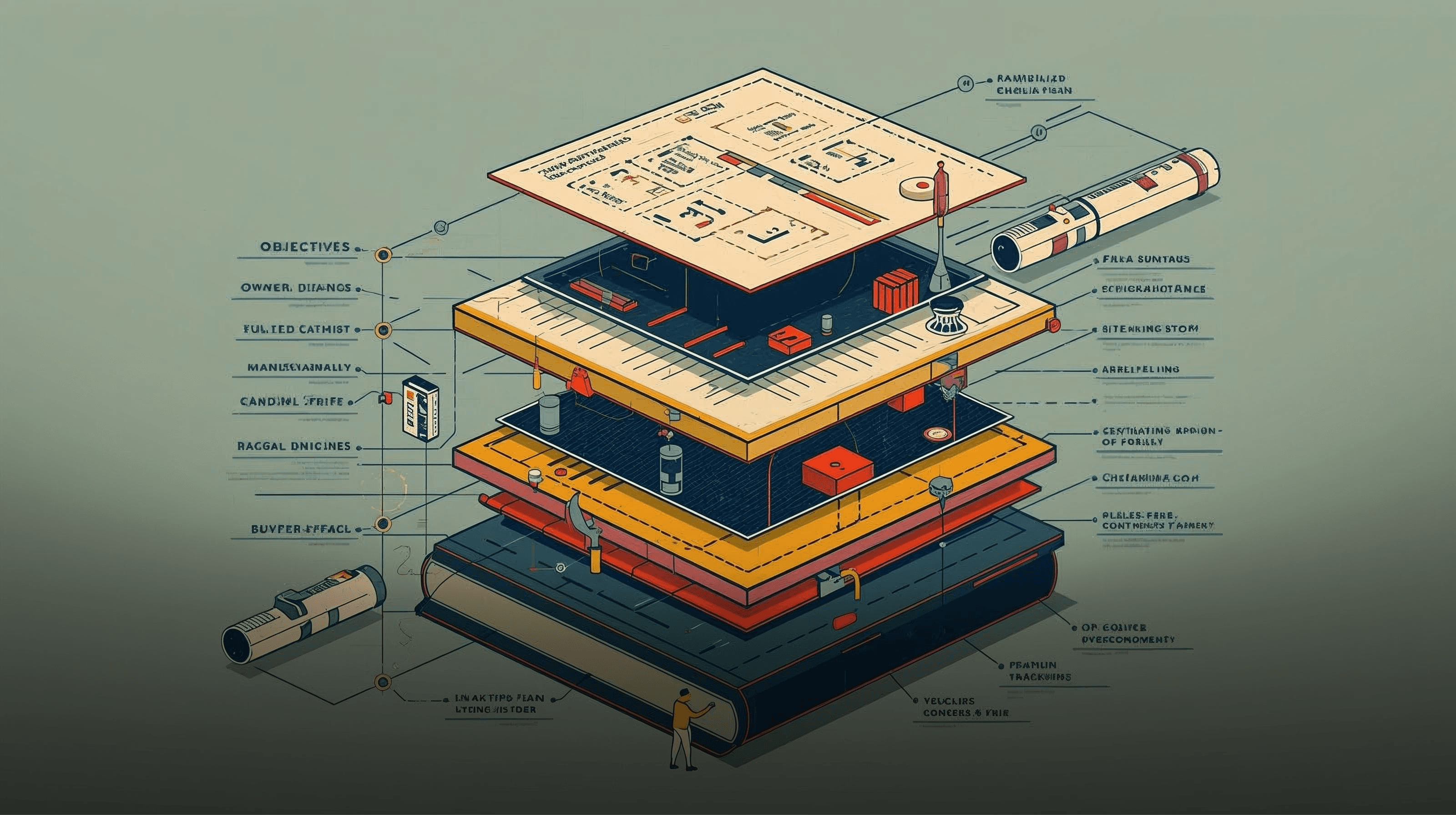
Think of the pre‑sales plan as a decision‑readiness blueprint, not a proposal checklist. It answers five questions before contracts are discussed:
Who must be comfortable for this decision to hold?
Which risks must be neutralized (security, legal, finance, operational)?
What proof will the buyer need to defend the choice internally?
How will ownership (and post‑purchase accountability) be shared?
What sequence of commitments makes final approval inevitable?
When those conditions are explicit, closing becomes confirmation, not negotiation.


The five pillars of an effective pre‑sales plan
1) Decision ownership clarity
Distinguish the decision maker (signs) from the decision owner (bears downside). Senior involvement keeps rising: recent buyer research shows decisions are frequently overruled by executives, with 38–41% involving the CEO at some point. Bring owners in early to design survivability (scope, rollout, support). SBI Growth. [sbigrowth.com]
2) Stakeholder risk mapping
Complex deals trigger different risk lenses—operations (disruption), finance (variance), security/legal (exposure), executives (reputation). Map what each is protecting and how to honor it without stalling momentum. For instance, privacy signals matter far beyond legal: Cisco reports 98% of organizations consider external privacy certifications important in purchase decisions—proactive evidence here builds trust with multiple reviewers. Cisco 2024 Privacy Benchmark (PDF); Cisco press. [cisco.com] [newsroom.cisco.com]
3) Internal decision narrative
Buyers don’t just choose; they justify. You need a crisp, executive‑ready narrative: why now, why this, why not alternatives, and how risk is contained. Forrester’s data showing 86% of purchases stall underscores the need for a defensible story that aligns multiple departments. Provide a one‑page decision brief the sponsor can circulate. Forrester newsroom. [forrester.com]
4) Proof sequencing, not proof dumping
Evidence matters, but timing matters more. Gartner finds buyers prefer rep‑free journeys yet report higher regret when buying purely via self‑service; deal quality improves 1.8x when supplier digital tools are used with a rep. Sequence proof to confidence gaps—early credibility, mid‑stage validation, late‑stage risk containment—rather than flooding buyers with everything at once. Gartner B2B Buying Report (PDF); Gartner webinar deck. [emt.gartnerweb.com] [s3.amazonaws.com]
5) Commitment architecture
Design a series of small, escalating commitments that de‑risk the big “yes”: alignment workshops, success‑criteria sign‑off, data‑security reviews, pilot definitions, executive readouts. Because buyers allocate only 17% of their time to meeting suppliers, your micro‑commitments must move the internal machine between meetings. Gartner press release. A structured path like this also reduces “no‑decision” risk highlighted by HBR’s 40–60% figure. Harvard Business Review. [gartner.com] [hbr.org]
Why sellers skip pre‑sales planning
Activity pressure masquerades as progress. Reps race to proposal, push demos, or “advance the stage” rather than engineer decision conditions. But in looping journeys (Gartner’s six jobs), skipping upstream alignment simply defers the stall. Gartner overview. The outcome shows up late as legal friction, pricing rework, or executive “re‑evaluation.” [gartner.com]
There’s also a hidden cost to neglecting early risk work: poor contracting practices erode ~8.6% of value on average across organizations, and much of that stems from misaligned expectations and reactive negotiation. Better pre‑sales alignment = less value leakage later. Deloitte–WorldCC; WorldCC ROI report (PDF). [deloitte.com] [worldcc.com]
How elite sellers operationalize pre‑sales planning
High performers externalize the plan with the buyer:
Decision map: roles, owners, approvers, ad‑hoc vetoes; expect late executive input (CEO/CFO) and preempt it with targeted narratives. SBI Growth. [sbigrowth.com]
Risk workbook: security/privacy artifacts, financial model assumptions, operational fallback plans. (Privacy certifications and AI‑use governance win confidence with risk owners.) Cisco 2024 Privacy Benchmark (PDF). [cisco.com]
Proof plan: who needs to see what, by when, and in which channel—aligning to buyers’ omnichannel behavior and ensuring a seamless experience that keeps them from switching. McKinsey B2B Pulse 2024; European Business & Finance write‑up. [mckinsey.com] [europeanbu...gazine.com]
Internally, top teams align sales, SEs, legal, and exec sponsors around what must be true for a confident yes, not just “what’s the next activity.”
A brief illustrative case
A global enterprise expressed strong interest and asked for a proposal. Instead of racing to price, the account team used a pre‑sales plan to surface decision ownership (operations would wear the downside). The team co‑designed a phased rollout with clear success criteria, provided a privacy/security packet to pre‑empt InfoSec review, and built an executive decision brief for CFO/CEO readout. When contracts arrived, negotiation was procedural; the deal closed on the original scope and price.
This mirrors the macro data: buyers report higher deal quality when reps augment digital tools (1.8×) and are more likely to switch suppliers if the experience feels disjointed—so the plan’s sequencing and omnichannel consistency materially change outcomes. Gartner B2B Buying Report (PDF); McKinsey B2B Pulse 2024. [emt.gartnerweb.com] [mckinsey.com]
Implications for sales leadership
Treat pre‑sales planning as both a forecasting and enablement control. In deal reviews, add four decision‑readiness questions:
Which owner bears downside and how have we protected them? (e.g., pilot, phased rollout) [sbigrowth.com]
Which risk owners (security, finance, legal, ops) are engaged and what artifacts have they seen? [cisco.com]
What proof, in what sequence, for which person—and in which channel? [emt.gartnerweb.com], [mckinsey.com]
What micro‑commitments are scheduled to reduce “no‑decision” risk this month? [hbr.org]
Leaders who institutionalize pre‑sales planning reduce late‑stage volatility and improve win rates without resorting to pressure tactics that backfire in today’s buyer‑controlled journeys. Forrester newsroom. [forrester.com]
Actionable takeaways
For sellers
Treat pre‑sales as the decision phase, not the pitch phase; design conditions for an inevitable, survivable yes. Gartner overview. [gartner.com]
Identify decision owners early and architect safety (scope, support, rollout, exit ramps). SBI Growth. [sbigrowth.com]
Map stakeholder risks and pre‑assemble artifacts (security, privacy, ROI model, TCO). Cisco 2024 Privacy Benchmark (PDF). [cisco.com]
Sequence proof to readiness; pair digital tools with human guidance to avoid regret. Gartner B2B Buying Report (PDF). [emt.gartnerweb.com]
Convert the big yes into micro‑commitments (success criteria sign‑off, pilot plan, steering cadence). Harvard Business Review. [hbr.org]
For sales leaders
Require a written pre‑sales plan (owners, risks, proof, commitments) for complex opportunities.. [gartner.com]
Review alignment and risk resolution, not just activities and stage dates; coach to decision readiness. Forrester blog. [forrester.com]
Track and de‑risk the late executive step‑in, which is increasingly common. SBI Growth. [sbigrowth.com]
Partner with legal/ops early to prevent the 8.6% value erosion tied to reactive contracting. Deloitte–WorldCC. [deloitte.com]
Final insight
Contracts don’t create decisions. They ratify them. In complex B2B sales, the cleanest closes are anticlimactic because the real work—engineering internal alignment, neutralizing risk, and sequencing commitments—happened in pre‑sales. Build the plan, and the signature follows.