People
How fear, safety, status, and trust shape collective decisions more than logic ever will
Buying has become emotionally distributed
In complex B2B environments, buying is no longer an individual cognitive act. It is a collective emotional experience shaped by many touchpoints and many people. Buyers today use around 10 channels on average and split their preferences almost evenly across in‑person, remote, and digital self‑serve interactions, which spreads influence and accountability across the group. That is McKinsey’s “rule of thirds.” McKinsey B2B Pulse 2024. At the same time, buyers spend only 17% of their total purchase time with all suppliers combined, which means the decisive conversations are happening without the seller present. Gartner press release. [b2b-marketing.org] [s3.amazonaws.com]
Buying groups themselves have expanded. Forrester reports an average of 13 internal participants per decision, and nearly 90% of purchases span multiple departments. Forrester newsroom. In that setting, business cases and ROI models are necessary, but they are not sufficient. The decisive forces are emotional even when expressed in rational language. [customerthink.com]
Logic aligns groups, emotion moves them
Teams often mistake agreement for readiness. Stakeholders nod in meetings, yet a decision slips. The data suggests why. Up to 40–60% of pipeline losses end in “no decision,” not a competitive loss, because buyers get cold feet. In a study of 2.5 million sales conversations, indecision and fear of making the wrong choice were the primary causes. Harvard Business Review. [eprints.bo...outh.ac.uk]
Behavioral science explains the gap. Prospect Theory shows people are loss averse. Losses loom larger than gains, so when accountability is personal, groups will hesitate even after agreeing on the logic. Kahneman & Tversky 1979 PDF . The result is familiar: logic creates surface alignment while unresolved emotion prevents action.
Groups optimize for emotional safety before economic value
Experienced leaders observe that committees will accept a suboptimal economic outcome if the decision feels safer, and they will delay an economically sound choice if exposure feels high. Organizational research backs this. Defensive decision‑making describes choices that protect the decider’s downside even when they are not best for the organization. It is common, and it increases when psychological safety is low. Journal of Occupational and Organizational Psychology, 2021. In a survey of 950 public‑sector managers, 80% admitted making at least one defensive decision in the previous year, often to avoid blame. SpringerOpen study. [info.worldcc.com] [gartner.com]
The core emotional currencies in group buying
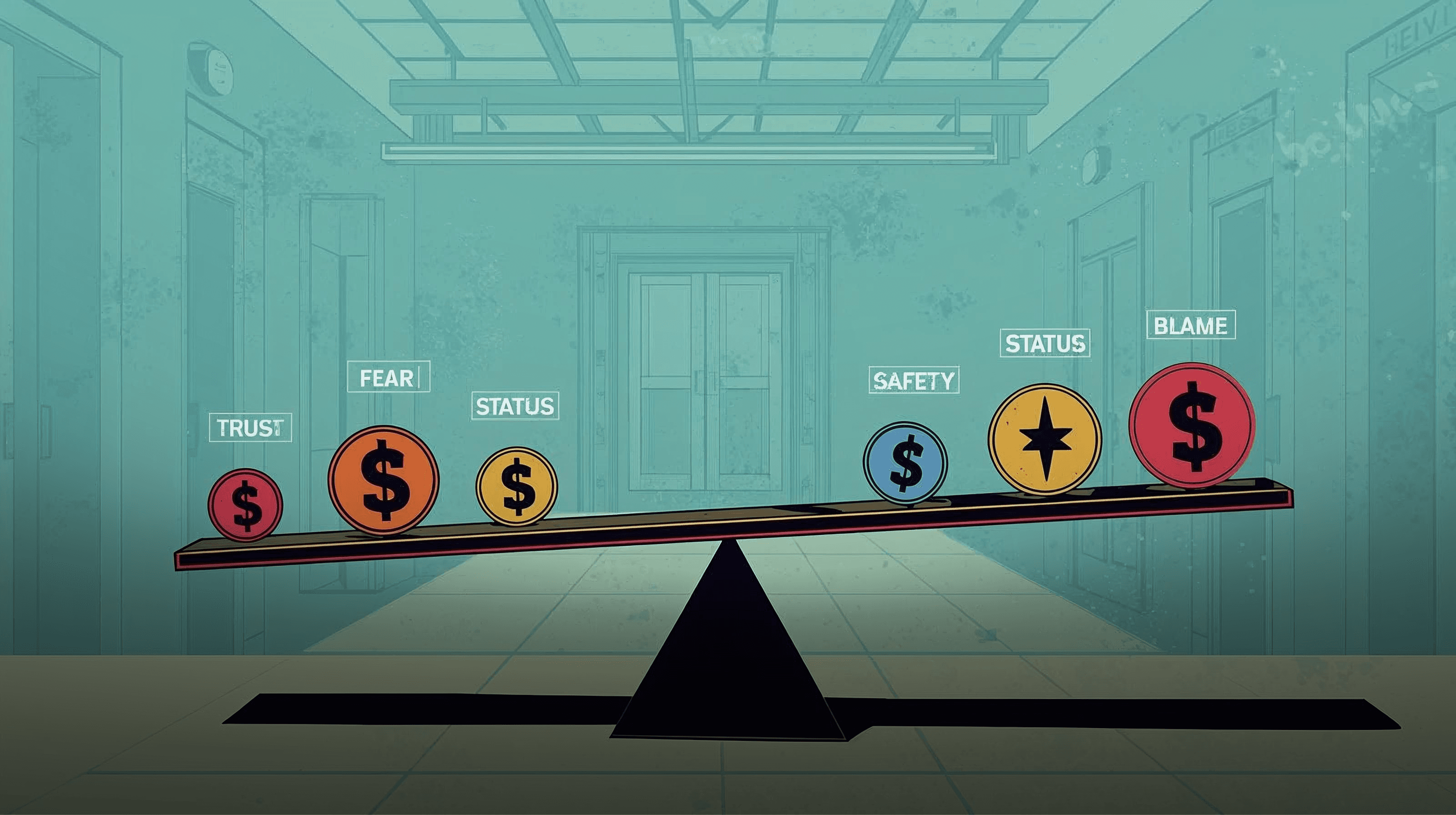
Group buying trades in four emotional currencies that either unlock or stall progress:
Safety. Stakeholders need to know the decision will not backfire on them. This drives process checks, phased rollouts, and risk registers. When buyers combine digital tools with seller guidance, perceived risk drops and outcomes improve. Gartner finds buyers are 1.8x more likely to report a high‑quality deal when they use supplier digital tools in partnership with a rep, and pure self‑service decisions see significantly higher regret. Gartner B2B Buying Report PDF ; Gartner webinar deck .
Legitimacy. People want assurance that peers and leaders will respect the choice. Forrester notes buyers now expect providers to work with the broader influence network that shapes internal confidence, not just the immediate stakeholders. Forrester newsroom. Certifications matter too. In Cisco’s global benchmark, 98% of organizations said external privacy certifications influence purchase decisions. Cisco 2024 Data Privacy Benchmark PDF. [customerthink.com] [pwcplus.de]
Status preservation. Stakeholders resist choices that could hurt credibility. Senior approval is rising and late vetoes are common. In recent buyer surveys, 38–41% of buying processes involved the CEO, and 58–78% of decisions were overruled by senior executives at least once. SBI Growth blog; SBI press note. [globalcons...review.com] [storyproc.com]
Belonging. People align with influential peers to protect relationships. Forrester’s findings highlight that decisions cross many departments, which amplifies the need for consensus narratives that allow everyone to move together. Forrester blog. [pwc.com]


How emotions surface indirectly through process
In group buying, emotion is encoded in procedure. Fear shows up as additional reviews or “one more” security assessment. Anxiety becomes a timeline slip. Status concerns trigger executive escalations. Trust deficits produce pilots and POCs. Sellers who treat these as “red tape” miss the signal. High purchase regret in self‑service journeys and higher deal quality in rep‑assisted paths underline the role of confidence and safety behind the process. Gartner B2B Buying Report PDF ; Mi3 summary of Gartner data .
Why committees amplify emotional dynamics
Committees do not neutralize emotion. They magnify it. As group size grows, diffusion of responsibility increases and individuals feel less personally accountable to act, especially under uncertainty. That is a well documented social psychology effect. ScienceBeta overview; Research review PDF. Combine that with larger, cross‑functional buying groups and the likelihood of stalls increases. Forrester newsroom. [theworkingdesk.co] [mckinsey.com] [customerthink.com]
The role of the seller in the emotional economy
Sellers are participants, not spectators. Every interaction either reduces or raises tension. Over‑indexing on urgency raises pressure. Ignoring risk raises anxiety. Overplaying upside increases fear of downside. The research is clear that emotion, not only logic, determines momentum. Deals die in “no decision” when buyers are uncertain about their risk, not just the ROI. Harvard Business Review. Omnichannel excellence also matters because buyers want to switch between channels without friction. More than half will change suppliers if the experience is clunky. McKinsey B2B Pulse 2024. [eprints.bo...outh.ac.uk] [b2b-marketing.org]
How elite sellers stabilize the emotional economy
High performers use repeatable moves that de‑risk the decision emotionally:
Name the risks without dramatizing them. This converts unspoken fear into solvable scope. It also aligns to what buyers reward, since buyers who work with reps alongside digital tools report better outcomes and lower regret. Gartner B2B Buying Report PDF .
Design reversibility. Offer pilots, phased rollouts, and explicit exit ramps with objective success criteria. Buyers respond because reversibility lowers personal exposure. HBR’s indecision research codifies “taking risk off the table” as a winning behavior. Harvard Business Review. [eprints.bo...outh.ac.uk]
Provide legitimacy signals. Bring peer benchmarks, third‑party validations, and certifications to meet the need for legitimacy. 98% of organizations weigh external privacy certifications in purchasing, so include them early. Cisco 2024 Data Privacy Benchmark PDF. [pwcplus.de]
Preserve status and belonging. Equip sponsors with executive‑ready decision memos and shared narratives that help the whole group move together. This directly addresses the expanded buying group and late executive scrutiny. Forrester blog; SBI Growth blog . [pwc.com]
A brief illustrative case
A cross‑functional committee aligned on a solution but delayed approval three times. Logical objections were closed. Emotion was not. The seller reframed the offer around safety and legitimacy: a 90‑day pilot with exit criteria and a packet of peer references and certifications, plus a one‑page decision memo for executive reviewers. Approval followed within two weeks. The economics did not change. The emotional balance did. That outcome aligns with data showing lower regret and higher quality when reps reduce risk and help buyers navigate the journey. Gartner webinar deck ; Gartner B2B Buying Report PDF .
Implications for sales leadership and deal strategy
Coaching must move beyond value props and qualification frameworks. Integrate emotional risk diagnostics into every stage review:
Who would be most exposed if this fails.
Where status could be threatened.
Which validations will create legitimacy.
What reversal plan lowers anxiety.
The commercial environment is unforgiving. 86% of purchases stall and 81% of buyers end dissatisfied, so teams that build emotional literacy will forecast more accurately and close with less pressure and more trust. Forrester newsroom. [customerthink.com]
Actionable takeaways
For sellers
Assume emotion governs group action even when the language is rational. Support logic with safety signals. Harvard Business Review. [eprints.bo...outh.ac.uk]
Interpret process behavior as emotional signals, not bureaucracy. Treat extra reviews and pilots as risk mitigation opportunities. Gartner B2B Buying Report PDF .
Reduce fear before increasing urgency. Use pilots, checkpoints, and explicit exit criteria. Harvard Business Review. [eprints.bo...outh.ac.uk]
Create legitimacy with third‑party proof and certifications buyers already value. Cisco 2024 Data Privacy Benchmark PDF. [pwcplus.de]
For sales leaders
Coach teams to diagnose emotional risk alongside business risk in every deal review. Forrester blog. [pwc.com]
Plan for late executive involvement and give sellers executive‑ready artifacts that preserve sponsor status. SBI Growth blog .
Invest in omnichannel experience quality, since buyers will switch if the journey feels disjointed. McKinsey B2B Pulse 2024. [b2b-marketing.org]
Final insight
Group buying is not a market of logic. It is an economy of emotion. Value creates interest. Emotion determines action. Sellers who master the emotional economy stop asking why buyers hesitate and start understanding what they are protecting. In modern B2B sales, that understanding is not a soft skill. It is the difference between alignment that stalls and decisions that actually happen.