Process
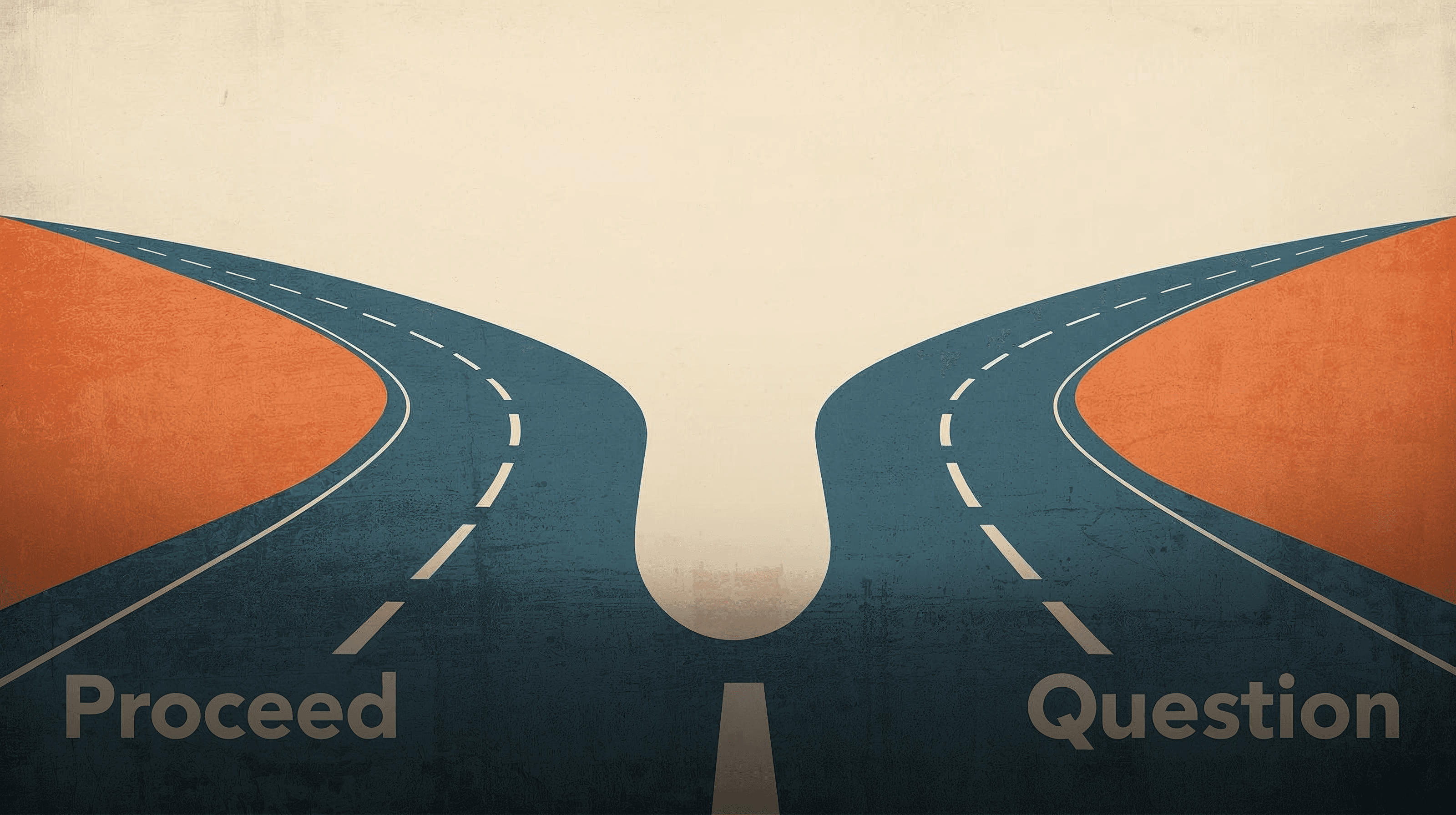
Process has become a signal, not just a sequence
Modern B2B buying processes don’t simply move a request from “interest” to “approval.” They encode how an organization manages risk, distributes accountability, and legitimizes the final choice. Buying groups now average ~13 stakeholders, 89% of purchases cross departments, and 86% of purchases stall—so process is the mechanism that reconciles competing priorities and protects decision makers when scrutiny rises. [opentext.com]
Those choices also travel across about ten interaction channels. More than half of decision makers say they’re likely to switch suppliers if the cross‑channel experience is clumsy, which means internal governance needs a coherent, documented story that can be defended in every channel it touches. [marketingscoop.com]
Implication: If you treat process as a box‑ticking path, you’ll miss what it’s trying to signal about risk, power, and exposure. [opentext.com]
Why this is urgent
Late‑stage stalls often happen when sellers either challenge necessary governance or respect compensatory process that’s masking indecision. In software purchases, the CFO frequently has final decision power (79%), Legal slows or blocks 61% of buys, and 57% of buyers expect ROI within three months. If you misread whether a step is risk‑reduction or risk‑avoidance, your effort rises while progress falls. [databox.com]
Add the technical reality: only ~28% of enterprise apps are connected; 81% of IT leaders say data silos hinder transformation; 95% report integration as a hurdle to AI. Many “extra steps” exist precisely to survive these integration and data‑governance risks. [bls.gov]
Heuristic: interpret process through risk, not preference
Ask, “What risk is this step designed to reduce?” If the step clearly lowers financial, legal, security, or operational exposure, respect it. If steps proliferate without shrinking uncertainty—endless analyses, repeated meetings with no new stakeholders, shifting criteria—challenge it. The goal isn’t speed for its own sake; it’s decision safety that stands up when the room widens and the channels multiply. [opentext.com], [marketingscoop.com]
When to respect the buyer’s process
Risk owners are engaged and getting what they need. CFO/FP&A wants a ≤90‑day outcome path and TCO with ranges; Legal wants liability bounds, data‑flow clarity, and termination options; Security wants access, encryption, and logging. These are institutional safeguards, not obstacles. [databox.com], [bls.gov]
Signals of alignment are stable. Problem statements and success criteria stay consistent across meetings and channels. In omnichannel journeys (≈10 channels), consistency is a predictor of real readiness. [marketingscoop.com]
In these cases, lean in: pre‑wire the gatekeepers, deliver governance artifacts early, and treat patience as a strategic investment that prevents the 86% stall pattern. [opentext.com]
When to challenge the buyer’s process
Activity without clarity. Agenda drift, repeated “reviews” that revisit settled topics, or analysis requests that don’t change decision math signal compensatory process. Given multi‑stakeholder complexity, that’s a red flag that conflict or ownership is unresolved, not that “more decks” are needed. [opentext.com]
Key risk owners are missing. If deals are advancing with CFO/Legal/Operations still “coming later,” challenge the sequence; these functions dominate the last mile and will reset terms if engaged late. [databox.com]
Cross‑channel incoherence. If the story changes between forums, the process is delaying commitment, not de‑risking it—especially risky in ≈10‑channel journeys. [marketingscoop.com]


How to challenge without triggering resistance
Reframe, don’t confront. Anchor to decision quality and risk reduction:
“What risk is this step meant to reduce, and has it already been addressed by the {pilot, TCO ranges, data‑governance plan}?” [databox.com], [bls.gov]
“Who must be comfortable even if they don’t sign, and what would they need to see now so we don’t restart later?” (Averages of ~13 stakeholders make early alignment a necessity, not a luxury.) [opentext.com]
“If we follow the remaining steps as designed, what outcome would leadership expect to be provable next quarter?” (Meets the ≤90‑day ROI norm.) [databox.com]
These questions respect governance while inviting the buyer to prune steps that add motion without safety. [opentext.com]
The role of selective friction
Sometimes the fastest path is a brief, purposeful slowdown: a 60‑minute alignment checkpoint with Finance and Operations; a data‑flow review that prevents late Legal redlines; a pilot scoped to the riskiest integration first. In stacks with low connectivity and siloed data, this friction reduces the probability of the classic late‑stage stall. [bls.gov]
What to coach and inspect (leaders)
Deal reviews: Is each step reducing risk or deferring it? Are CFO/Legal/Ops engaged with the evidence they require (≤90‑day outcomes, TCO ranges, liability/data controls)? [databox.com], [bls.gov]
Forecasting: Track governance readiness (gates scheduled, artifacts accepted) rather than stage names. It’s how you beat the 86% stall statistic. [opentext.com]
Actionable takeaways
Interpret process through risk reduction; respect safeguards, challenge compensatory steps. [opentext.com]
Pre‑wire gatekeepers with portable artifacts that travel across ≈10 channels: an executive one‑pager, a finance memo with ranges/≤90‑day milestones, and a governance pack (data flows, access, encryption, logging). [marketingscoop.com], [databox.com], [bls.gov]
Use respectful, outcome‑focused questions to prune steps that add motion without safety. [opentext.com]
Final insight: Buyer process is a signal about risk and power. Read it. Decide deliberately when to comply and when to intervene. That judgment—grounded in data and governance reality—is the difference between motion and progress. [opentext.com], [marketingscoop.com], [databox.com], [bls.gov]