Solution Focus
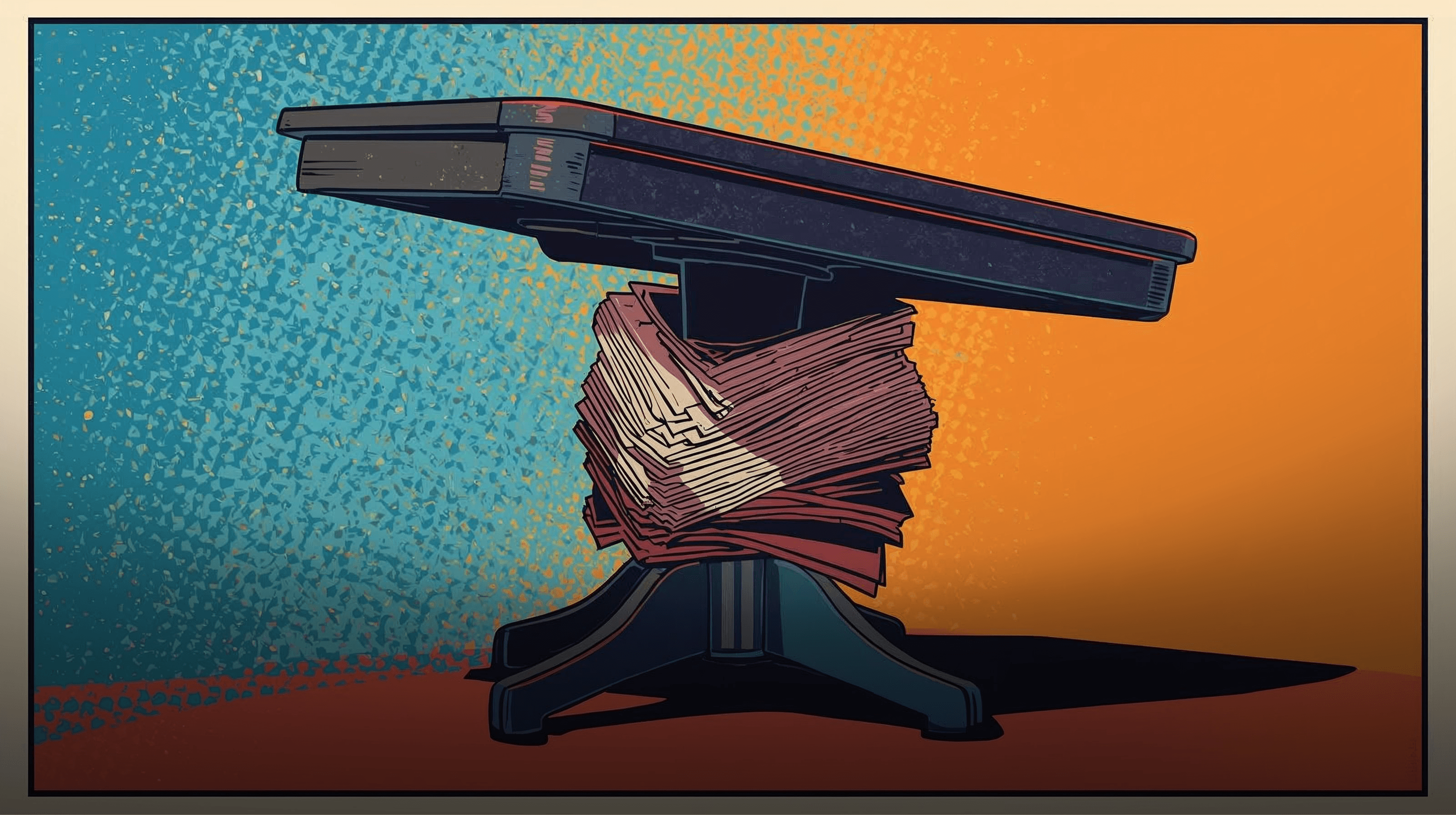
Why constant repositioning erodes trust, how excessive flexibility signals uncertainty, and what disciplined sellers do to remain adaptable without appearing unstable
Adaptability is expected, but coherence is rarer
Modern B2B buying is complex and noisy. Buying groups have grown; summaries of Gartner’s research show ~8.2 stakeholders involved in a typical complex decision (up from 6.8), which multiplies perspectives, incentives, and internal politics sellers must navigate (source). At the same time, the buying process itself is fragile: Forrester reports 86% of purchases stall somewhere along the way and 81% of buyers are dissatisfied with the provider they select, highlighting how uncertainty and cross‑functional friction pervade deals (source). [utdallas.edu] [spotio.com]
That volatility pressures sellers to respond and reframe constantly. But when adaptability turns into frequent, unanchored pivots, buyers stop seeing responsiveness and start sensing instability.
Excessive pivoting undermines trust before it undermines logic
In group deals, buyers are already overloaded. Collaboration time inside organizations has ballooned by 50%+, and 20–35% of value‑added collaboration comes from just 3–5% of employees—meaning a small set of influential stakeholders are routinely over‑asked and time‑starved (Harvard Business Review). When a seller changes positioning meeting to meeting, these stakeholders infer uncertainty and risk, and the already delicate internal alignment becomes harder to achieve—one reason the system stalls so often (Forrester, 2024). [Kruglanski...002) A ...] [spotio.com]
Trust frays before anyone objects to features or price. The pattern is subtle: more “validation” requests, extra reviewers, and “internal alignment” delays. These are classic symptoms of credibility concerns wrapped as process needs. [spotio.com]
Defining solution thrash
Solution thrash is repeated, visible repositioning—cost today, speed tomorrow, flexibility next week—without a stable diagnosis that explains why the recommendation is changing. Each micro‑pivot looks reasonable in isolation. Collectively, it signals “we’re still figuring this out,” which buyers experience as risk in multi‑stakeholder settings where the cost of a bad decision is shared (and therefore politicized) (Gartner trend summary; Forrester, 2024). [utdallas.edu], [spotio.com]
Why solution thrash feels responsible in the moment
Most reps thrash because they are trying to help: accommodate a finance preference, then an IT concern, then an ops nuance. Under pressure, flexibility feels like competence. But when the story changes too often, committees infer a lack of conviction and worry that the final delivered solution will keep shifting. That perception is enough to trigger stall behaviors documented in current B2B research (Forrester, 2024). [spotio.com]
The credibility equation: Consistency + rationale > constant novelty
Advisors earn trust by being intelligible over time—not by having a new answer for each voice at the table. In noisy environments with ~8+ stakeholders and extensive collaboration overhead, buyers look for a throughline that will hold up in executive reviews and downstream implementation reviews (Gartner summary; HBR). This does not mean rigidity. It means coherence: when you refine the plan, explain the causal link to what changed, so stakeholders see method rather than improvisation. [utdallas.edu], [Kruglanski...002) A ...] [spotio.com]
How buyers experience solution thrash
They ask for more “proof.” Extra demos, references, or pilots to compensate for perceived instability. [spotio.com]
They expand the circle. More stakeholders join to protect against downside risk—consistent with larger buying groups and the overload dynamics those create (Gartner summary; HBR). [utdallas.edu], [Kruglanski...002) A ...]
They defer. “We need internal alignment” proliferates, a known contributor to the 86% stall rate (Forrester, 2024). [spotio.com]
What looks like indecision is frequently a credibility check triggered by inconsistent messaging.


Evolution vs. thrash: Know the line
Healthy evolution has a spine:
The diagnosis remains stable.
New information refines scope or sequencing.
The why behind changes is explained explicitly.
Thrash lacks that spine:
The problem statement drifts implicitly.
The recommendation morphs without a causal explanation.
The buyer has to reconcile changes on their own—creating doubt and delay (a pattern linked to today’s stall statistics). [spotio.com]
Why thrash spikes late‑stage risk
Late‑stage deals are dominated by personal and organizational risk calculus. If your solution still shifts at this point, skeptical stakeholders assume unknowns remain. Given the high collaboration cost and reputational exposure of large committees, they will slow or reset the process rather than authorize an unstable plan (HBR: collaboration load; Forrester: stalls). [Kruglanski...002) A ...], [spotio.com]
The role of fear in driving thrash
Behind thrash you often find fear: of losing the deal, of disagreement, of being “wrong” in front of new executives. Fear pushes reps toward approval‑seeking—chasing each objection with a different angle—rather than decision leadership. In multi‑stakeholder settings, that reads as uncertainty, not customer‑centricity, and fuels the stall loop (Forrester, 2024). [spotio.com]
What disciplined sellers do instead
1) Anchor to a stable diagnosis
State the core problem early, in buyer language, and return to it often. When something material changes, tie any pivot to a named learning: “Because Finance requires X to release funds, this step moves earlier; the objective and success criteria remain the same.” This keeps coherence while adapting to real constraints—critical in committees averaging ~8.2 stakeholders (Gartner summary). [utdallas.edu]
2) Use a single narrative with local chapters
Hold one throughline (problem → approach → risks → outcomes), and tailor chapters (finance proof, IT integration, ops workflow) without rewriting the plot. This respects collaboration limits and avoids the cognitive overload documented in complex organizations (HBR). [Kruglanski...002) A ...]
3) Explain the “why” behind each adjustment
Make every change auditable. Name the input, the implication, and the decision rule you used. Transparency converts “Are they guessing?” into “They are methodical,” reducing the perceived risk that drives stalls (Forrester, 2024). [spotio.com]
4) Sequence risk owners, not features
Map which function must say “yes” first to release others (e.g., Finance needs cost certainty before IT allocates resources). This reduces internal friction and helps committees converge—especially when collaboration load is skewed to a few overtaxed “go‑to” people (HBR). [Kruglanski...002) A ...]
5) Hold a point of view
Offer a recommendation with clear trade‑offs. In Forrester’s data, providers who guide buying groups through complexity fare better than those who passively enumerate options in already stalled journeys (Forrester, 2024). [spotio.com]
A brief illustrative example
A rep began with “operational efficiency.” When Finance arrived, the story pivoted to “cost savings.” Later, with IT in the room, it became “integration flexibility.” Each shift was defensible; together, they fractured the narrative. A disciplined alternative would have anchored every conversation to one diagnosis (e.g., “reduce multi‑function risk while meeting X business outcome”), then sequenced evidence for Finance and IT under the same throughline. The result: coherence, less perceived risk, and fewer stall behaviors—consistent with how large committees evaluate under load (Forrester, 2024; HBR). [spotio.com], [Kruglanski...002) A ...]
Implications for sales leadership
Coach for narrative coherence, not just responsiveness. Over‑rewarding quick accommodation trains thrash. Tie enablement to sustaining a single diagnosis across functions (HBR). [Kruglanski...002) A ...]
Instrument late‑stage pivot reviews. Require a short “why this changed” note that cites the input and decision rule, especially after executive joins—reducing fear‑driven re‑frames that trigger stalls (Forrester, 2024). [spotio.com]
Redesign deal reviews to sequence risk owners. Ask “Whose yes unlocks others?” and plan meetings accordingly to control collaboration drag (HBR). [Kruglanski...002) A ...]
Actionable takeaways
For sellers
Anchor every change to a stable diagnosis and explain the why. [spotio.com]
Keep one narrative; tailor chapters for functions without rewriting the plot. [Kruglanski...002) A ...]
Sequence risk owners; avoid feature‑first ping‑pong in big committees. [Kruglanski...002) A ...]
Offer a recommendation with trade‑offs instead of expanding option sets in already stalled journeys. [spotio.com]
For leaders
Reward coherence and conviction, not just accommodation speed. [Kruglanski...002) A ...]
Track late‑stage repositioning as a risk metric and require a written rationale. [spotio.com]
Train reps to tolerate tension; approval‑seeking is the seed of thrash. [spotio.com]
Final insight
Adaptability is essential in complex sales. Instability is not. Solution thrash is what happens when flexibility is untethered from a stable diagnosis and a clear throughline. In multi‑stakeholder, high‑friction environments—where committees are large and stalls are common—buyers do not expect sellers to be static. They expect them to be grounded: to adjust thoughtfully, explain their reasoning, and maintain a coherent story from problem to prescription. That is how you preserve credibility while you adapt—and how you keep complex deals moving in systems designed to slow them down (Forrester, 2024; HBR). [spotio.com], [Kruglanski...002) A ...]