Process

Traditional funnels: awareness → evaluation → decision, are obsolete.
Today’s B2B buying journey is non-linear, complex, and largely invisible. Buyers loop, stall, revisit, and debate internally long before and after engaging a rep.
Modern buying journeys contain hidden steps like internal negotiations, risk assessments, and informal conversations, that reps rarely see. Whenever we are experiencing hurry-up-and-wait moments in the sales cycle, these hidden steps could very well be happening. And they often dictate deal velocity more than visible steps.
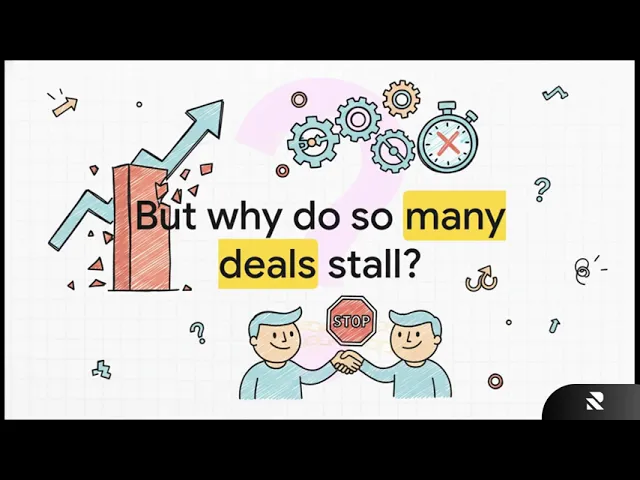
Stalled Deals Are Usually Just Invisible Buyer Steps
Pipeline reviews often flag deals as “stalled.” In reality, buyers are navigating unseen internal processes.
Examples of hidden steps:
A director seeking political cover from a VP
A champion aligning finance and IT
A risk officer reviewing compliance
A team debating priority trade-offs
Why this matters:
Over 40% of B2B deals stall due to internal misalignment (source).
91% of purchases stall at some point because internal teams struggle to align (source).
Top performers succeed because they anticipate and influence these invisible steps.
Five Hidden Steps in Every Buying Journey
Research shows these five steps occur whether sellers see them or not:
1. Internal Problem Validation
After the sales conversation ends, buyers don’t immediately move to evaluation. They first double-check that the problem is real, significant, and aligned with broader organizational needs.
They ask themselves:
“Is this really worth solving?”
“Does this fit our strategy?”
“Who else feels this pain?”
“What happens if we don’t fix this?”
Stat: Buyers change their problem statement 3.1 times during complex purchases (source).
What most reps miss: They assume that because the buyer articulated a problem, they already have internal conviction.
What top reps do: They quantify the impact, provide internal narratives, and help the buyer articulate the downstream costs of inaction. They make the problem internally obvious.
2. Priority Competition
Even when a problem matters, it must compete against:
Other initiatives
Limited budget
Leadership attention
Departmental priorities
In-flight projects
Problems compete for budget and leadership attention.
Stat: 86% of B2B purchases stall during the buying process (source).What most reps miss: They frame value in isolation, not competition.
What top reps do: They position the initiative not just as valuable, but as more valuable than alternatives. They help buyers elevate the problem to leadership-level relevance.


3. Risk Calibration
Before moving forward, buyers silently assess risk:
Implementation friction
Political exposure
Financial downside
Stakeholder resistance
Integration hurdles
This step often involves internal “what if” conversations the rep never hears.
Stat: 77% of buyers cite risk as a major factor in decision-making (source).
What most reps miss: They assume buyer enthusiasm means risk has been neutralized.
What top reps do: They proactively map risks, explain mitigation steps, and share what might go wrong — building trust through transparency rather than persuasion.
4. Stakeholder Synthesis
Champions attempt to reconcile the competing priorities and perspectives of:
Finance
Operations
IT
Legal
Procurement
Leadership teams
This often occurs through informal conversations, hallway chats, or Slack threads — none of which involve the seller.
Stat: The average buying group now includes 10–11 stakeholders (source).
What most reps miss: They think the champion can repeat the sales narrative accurately.
What top reps do: They provide role-specific talking points, internal memos, and clear prescriptions the champion can distribute. They act as the architect of internal alignment, not a spectator.
5. Path-to-Yes Construction
Even when they want to move forward, buyers must determine:
How to justify the recommendation
Who must approve the purchase
What steps are required for signoff
What objections could arise
How to protect themselves politically
This is the “internal deal cycle” that defines whether decisions happen fast, slow, or not at all.
Stat: Sales cycles have increased by 22% over the past five years (source).
What most reps miss: They assume the buyer knows how to buy.
What top reps do: They co-create the internal buying roadmap: milestones, approvals, documents, timelines, risks, and strategies for internal advocacy.
Why These Hidden Steps Matter
These steps explain the most persistent sales symptoms:
Deals with strong discovery that mysteriously stall
Buyers who go quiet despite apparent enthusiasm
Committees that move slowly without clear objections
Evaluations that restart repeatedly
Forecasted deals that slip, sometimes more than once
These are not sales problems.
They are unmanaged buyer steps.
Great sellers influence the journey buyers actually experience, not the one sellers wish existed.
A Framework: How to Manage the Hidden Buyer Journey
Convert problems into strategic narratives: This powers internal validation.
Map competing priorities and position superiority: This helps buyers argue for the initiative.
Surface and de-risk hidden concerns: This reduces political and execution fear.
Enable champions with persona-specific materials: This strengthens internal alignment.
Co-create the internal buying process: This accelerates approvals and creates a predictable path.
Impact:
For sales teams, the implications are meaningful and measurable.
When hidden internal steps are surfaced and actively managed, forecast accuracy improves. Deals are no longer derailed by last-minute surprises that were always there but never acknowledged. What once felt unpredictable becomes visible, and visibility brings control.
Champion power also increases. Instead of asking internal advocates to “figure it out,” sellers equip them with the clarity, language, and materials they need to persuade stakeholders across the organization. Champions move from passive supporters to effective internal leaders of the deal.
Sales cycles shorten as a result. Internal approvals, reviews, and consensus-building no longer run unattended in the background. By guiding these steps intentionally, sellers prevent momentum from stalling and keep progress moving forward.
This approach also creates real competitive differentiation. Very few sellers help buyers navigate their own internal complexity. Those who do are perceived not just as vendors, but as strategic partners, making the seller noticeably harder to replace.
Ultimately, win rates increase. Not because of better closing tactics, but because the true forces shaping the outcome of deals are finally being understood, anticipated, and influenced.
Actionable Takeaways
Assume every deal contains hidden steps and design for them.
Enable champions to communicate internally with clarity.
Map risks before buyers do. Transparency builds trust.
Frame value relative to competing priorities.
Treat the internal buying process as part of the sales process.